Removal and the Stories We Tell
Trail of Tears State Park
Cape Girardeau County, Missouri
Listen | Hidden in Plain Sight
Where in Missouri?
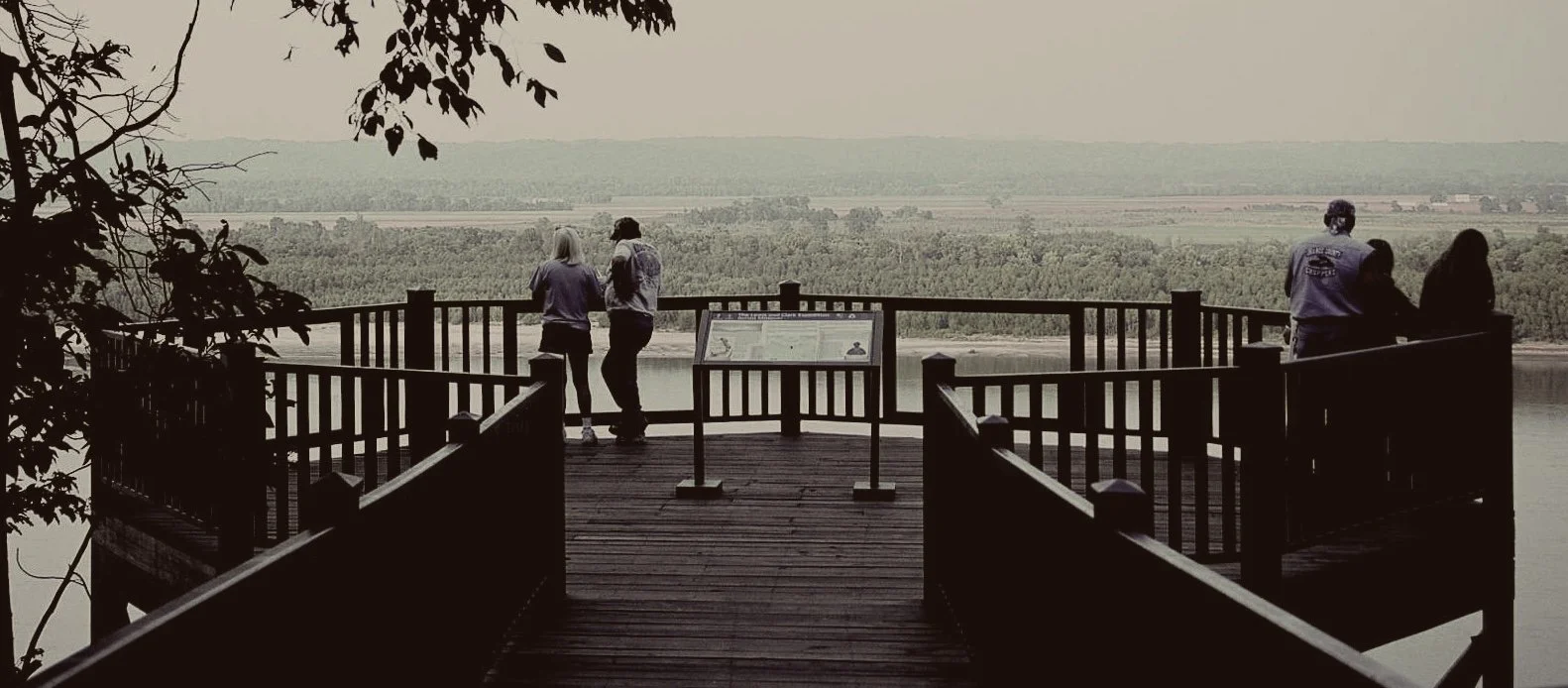
Margot and Heather travel to Cape Girardeau County and Trail of Tears State Park, a site overlooking the Mississippi River that marks one of the most painful chapters in American history — the Trail of Tears, which saw some 60,000 Native Americans forced from their homelands in the Eastern United States and sent to lands promised to them in Oklahoma. This included some 13,000 members of the Cherokee Nation, who traveled the northern route of the Trail, traversing Missouri in the coldest of winter of 1838-1839.
We talk to English Professor Chris Otto about the story of a woman whose death on the trail took on mythological proportions as she became known as “Princess Otahki,” and was venerated by the park and the neaby town of Cape Girardeau. And we speak with Will Chavez, of the Cherokee Nation and its annual “Remember the Removal Bike Ride,” to learn more about the trail, about the story behind the Otahki myth, and how the Nation commemorates removal today.
-
To visit the Trail of Tears State Park, we suggest you begin by visiting the park website located here.
-
Chapman, Carl H. and Eleanor F. 1983. Indians and Archaeology of Missouri, Revised Edition. University of Missouri Press,
Dickey, E. Michael. 2011. The People of the River's Mouth: In Search of the Missouria Indians. University of Missouri Press.
Flader, Susan, ed. 1992. Exploring Missouri’s Legacy: State Parks and Historic Sites. University of Missouri Press.
Gilbert, Joan. 1996. The Trail of Tears across Missouri. University of Missouri Press.
“Ignon Ouaconisen or Francoise of the Missouri Nation.” McMillen, Margot Ford and Heather Roberson. 2004. Into the Spotlight. University of Missouri Press.
“Sacred Sun.” McMillen, Margot Ford and Heather Roberson. 2002. Called to Courage: Four Women in Missouri History. University of Missouri Press.
Olson, Greg. Indigenous Missourians: Ancient Societies to the Present. 2024. University of Missouri Press.
Wolferman, Kristie C. 1997. The Osage in Missouri. University of Missouri Press.
Video: Si Otsedoha (We Are Still Here): Remembering Cherokee Removal https://www.youtube.com/watch?v=0dMKxXgCHOI
-
Remembering Native Removal: Ongoing Projects and Community Efforts
The Cherokee Nation’s Annual Remember the Removal Bike Ride brings Cherokee youth along the historic northern route of the Trail of Tears to learn and commemorate Cherokee history and the Trail of Tears.
In Steelville, Missouri, the Steelville Remembrance Committee of the Steelville Area Historical Societypreserves and interprets Trail of Tears history in Crawford County and surrounding areas. Projects include a planned monument featuring a sculpture by Cherokee/Pawnee artist, Daniel HorsChief.
In the Ozarks, Archaeologist and PhD candidate Erin Whitson has collaborated with archaeologists and Native communities to develop non-invasive methods to research, historic encampment sites on the Trail of Tears.
Columbia, Missouri’s annual “For the People Pow-Wow” brings together members of many tribes for dance, music, and cultural celebration.
The Kansas City Indian Centerprovides services, advocacy, and cultural programming for members of the Native American community in the Kansas City region.
-
Do you know of a great Missouri story hidden in plain sight? We'd love to hear it! Please contact us.